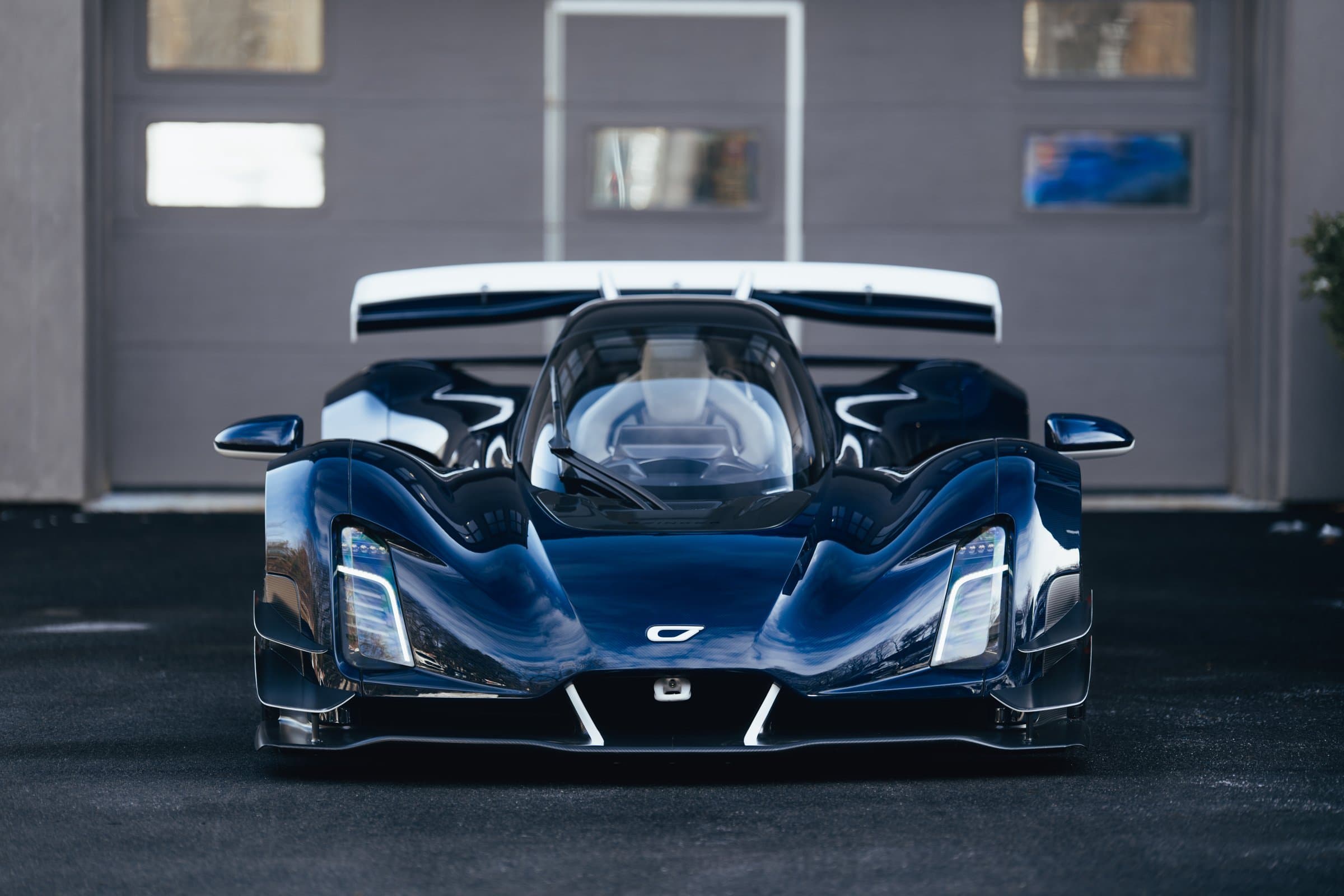
Technicals
Every verified figure behind the world’s first Human-AI designed, 3D-printed hypercar.

Technical specifications · Spyder / HDF / VMax
Headline figures
Combined output
Top speed
407 km/h Top speed
0–62 mph
1.9 s 0–100 km/h
Power to weight
1:1
Redline
Twin-turbo V8, in-house design
Power density
245 kW/l Power density
Dry weight
1,250 kg Dry weight
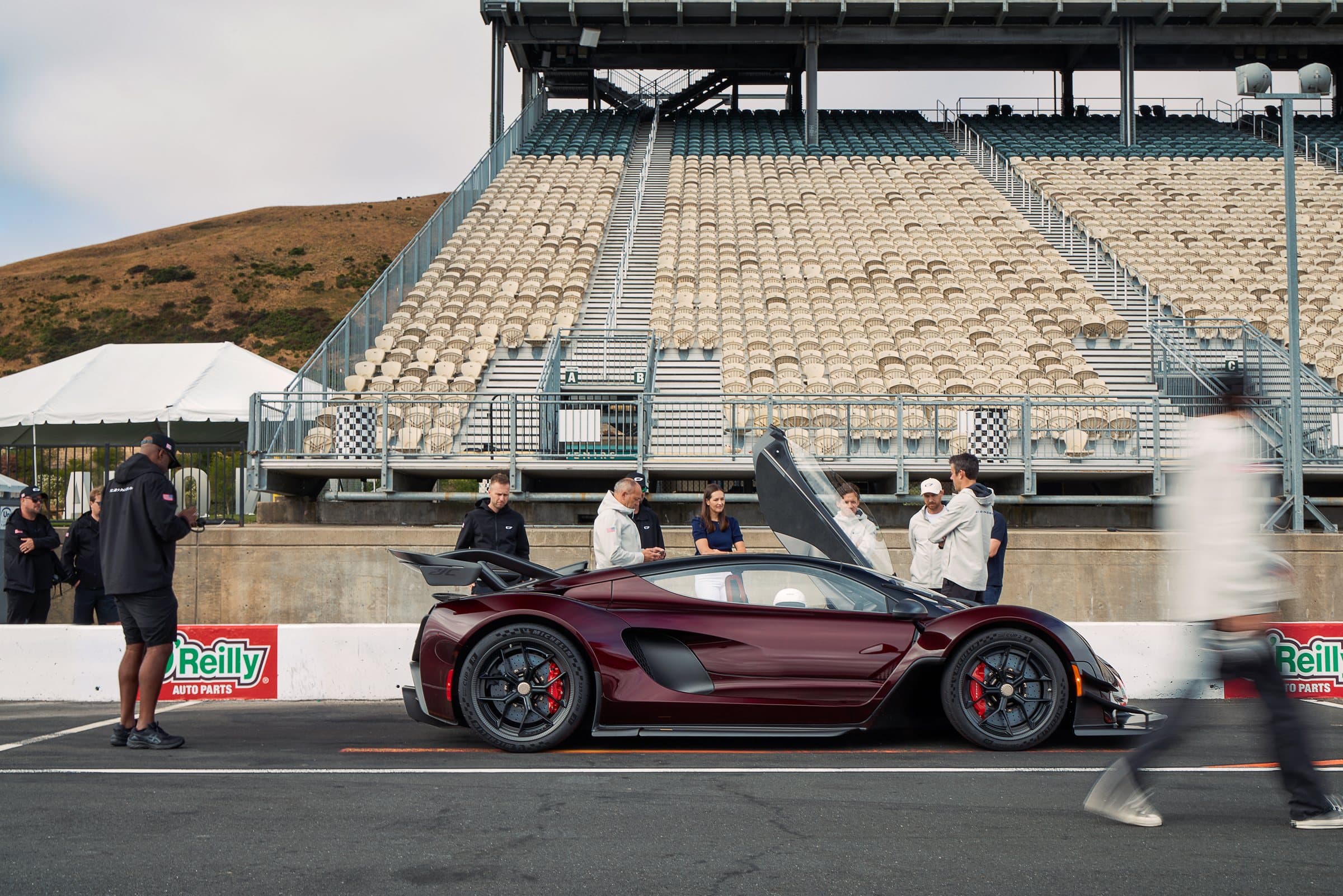
Proven on track
Fastest production car in the world.
Human-AI designed to be the ultimate combined road and track weapon. Sector-leading downforce and effective power deliver dominant track performance.
Laguna Seca
1:25.44
Production car lap record
Circuit of the Americas
2:11.33
Production car lap record
Full specification
Every figure, on the record.
The world’s first Human-AI designed and 3D-printed hypercar. A strong-hybrid powertrain pairs the in-house designed 2.88-liter twin-turbo V8 with 800V electric drive for a combined 1,250 hp (932 kW) — a 1,350 hp option is available.
Powertrain
Engine
2.88L flat-plane-crank twin-turbo V8
Powertrain
Strong Hybrid, 800V electric drive
Combined output
1,250 hp
Redline
11,000 rpm
Performance
0–62 mph
0–100 kph
1.9 sec
Downforce @ 150 mph
3,307 lbs (1,500 kg)
Top speed
Up to 253 mph (VMax)
Chassis & weight
Chassis
Additively manufactured structures with carbon fiber monocoque
Dry weight
3,571 lb (1,620 kg)
Bodywork
Carbon fiber
Aerodynamics & output
Lift-to-drag
3.0:1
Power density
260 hp/l (245 kW/l)
Combined output
1,250 hp (932 kW)
Variant comparison
Where the variants differ.



Top speed
205 mph (330 km/h)
205 mph (330 km/h)
253 mph (407 km/h)
Dry weight
3,571 lb (1,620 kg)
3,571 lb (1,620 kg)
3,571 lb (1,620 kg)
1/4 mile
—
8.7 s
8.5 s
Configuration
Open-top Spyder
High-downforce package
Low-drag V Max
Top speed
21C Spyder
205 mph (330 km/h)
21C HDF
205 mph (330 km/h)
21C VMax
253 mph (407 km/h)
Dry weight
21C Spyder
3,571 lb (1,620 kg)
21C HDF
3,571 lb (1,620 kg)
21C VMax
3,571 lb (1,620 kg)
1/4 mile
21C Spyder
—
21C HDF
8.7 s
21C VMax
8.5 s
Configuration
21C Spyder
Open-top Spyder
21C HDF
High-downforce package
21C VMax
Low-drag V Max
Inquire with Czinger
Dream without compromise.
Eighty will ever exist. Yours begins in the configurator.